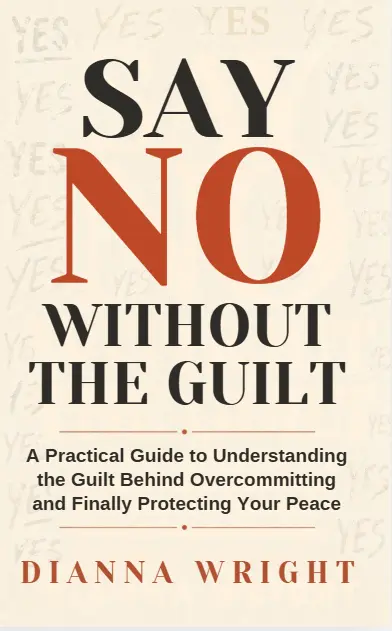
Say No Without the Guilt book cover by Dianna Wright
← All books

Personal Growth & Spirituality

Say No Without the Guilt

A Practical Guide to Understanding the Guilt Behind Overcommitting and Finally Protecting Your Peace

You know the moment. Someone asks you for something, and before you have checked your schedule, your energy, or what you actually want, you hear yourself say yes.

Later, the resentment arrives. So does the exhaustion, followed by the uncomfortable realization that nobody forced you to agree. Saying no simply felt as though it might cost more than saying yes.

Say No Without the Guilt is not just a collection of scripts. It explores the guilt beneath overcommitting, where that guilt comes from, and why another person’s disappointment can feel like proof that you have done something wrong.

Through practical guidance, reflection, and words you can use in real situations, the book helps you pause before answering, set boundaries without overexplaining, handle pushback, and protect your peace even when the guilt still shows up.

By
Dianna Wright
Release
Available now
Edition
A practical guide

The guilt beneath the yes

Saying no is rarely difficult because we do not know the word.

We know how to say no. What makes it difficult is everything we fear the word might cost us: approval, connection, usefulness, belonging, or the certainty that we are still a good person.

That fear can make an automatic yes feel safer, even when it leaves us exhausted, resentful, and stretched beyond what we can honestly give.

The goal is not to stop caring about other people. It is to stop abandoning yourself in order to prove that you care.

A practical path forward

Understand the pattern, then practice a different response.

Where the Guilt Comes From

Recognize the old lessons that taught you another person’s unhappiness was a risk you could not afford.

The Cycle of Overcommitting

See how the automatic yes leads to resentment, exhaustion, withdrawal, and the promise to do better next time.

What a Boundary Actually Is

Move beyond punishment and control toward clear decisions about what you can offer and what you cannot.

When the Guilt Still Shows Up

Learn to recognize discomfort without automatically treating it as proof that your decision was wrong.

Handling Pushback

Stay grounded when someone questions, negotiates, criticizes, or refuses to accept your answer.

Words You Can Use

Find practical language for work, family, invitations, emotional availability, money, and last-minute requests.

The nine chapters conclude with a reminder that changing this pattern does not require a perfect response. It begins by creating enough space to hear what is true before the old answer speaks for you.

For the person everyone counts on

This Book Is for You If…

You say yes before checking whether you have the time, energy, or desire to follow through.

You explain your boundaries until they begin to sound like invitations to negotiate.

You feel responsible for preventing another person’s disappointment, anger, or discomfort.

You want practical ways to protect your peace without becoming cold, uncaring, or disconnected from the people you love.

Or if you are ready to understand that guilt may show up when you say no, but it does not have to make the decision for you.

Beyond the Page

What If Their Disappointment Doesn’t Mean You Did Anything Wrong?

A reflection on boundaries, overexplaining, and learning to let someone be disappointed without abandoning yourself.

Read the Reflection